
Eco-solvent printers are the workhorses of many sign and display shops. The inks bite into vinyl, banner and other coated media, giving prints that already stand up reasonably well to weather and handling. So why coat them at all? Usually because the job needs more than the ink alone can offer: resistance to cleaning chemicals, protection on floor or wall graphics that get touched and scuffed, stronger UV protection for long periods in the sun, or a specific surface finish.
Timing matters more than anything
Eco-solvent ink dries partly by solvent evaporating from the print, and that continues well after the print feels dry to the touch. If a coating goes on while solvent is still leaving the ink, it can be trapped beneath the new layer. The likely results are a soft or tacky finish, haze, poor adhesion or problems that appear later rather than straight away.
Allow eco-solvent prints to dry and outgas fully before applying Colourjet or laminating. How long that takes depends on ink load, media, room temperature and airflow, and on your printer’s dryer settings, so follow the media and ink guidance you already use for lamination and err on the side of patience. Heavily saturated areas and rolled-up prints need the most time.
Recommended approach
- Let prints dry loose or hung, rather than tightly rolled, so solvent can escape.
- Keep the surface clean and dust-free. Any contamination will be sealed in.
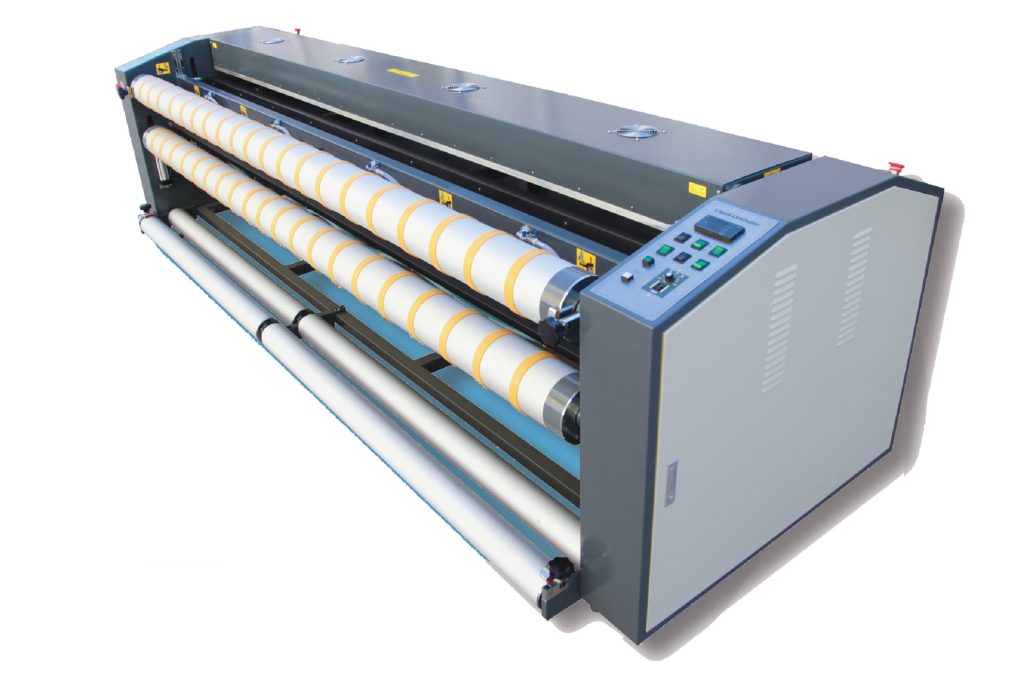
- Apply Colourjet in an even layer. For production volumes, a liquid lamination machine gives far more consistent results than hand application.
- Let the coating dry fully before rolling, stacking or installing.
Liquid lamination is often a practical alternative to film lamination for eco-solvent work, particularly on wallcoverings, textured media and large pieces where film can trap air or show silvering. Our equipment range includes liquid lamination machines and the Kala Applikator flatbed laminator if you are weighing up both methods.
Checks before a full run
- Coat a test strip on the same media with your densest colours and check adhesion once dry, for example with a tape test.
- Look for haze, softening or colour change in heavy ink areas.
- Check the media itself. Some uncoated or speciality substrates react to solvents regardless of the ink.
- If the print will be cut, folded or applied over curves, test that the coated print still behaves as expected.
For more on where coated eco-solvent prints are used, see our applications section.
If you have a new media or an unusual job, we are happy to look at a printed sample before you commit. Call 01252 624 411 or email info@landoruk.com and we will talk you through it.