
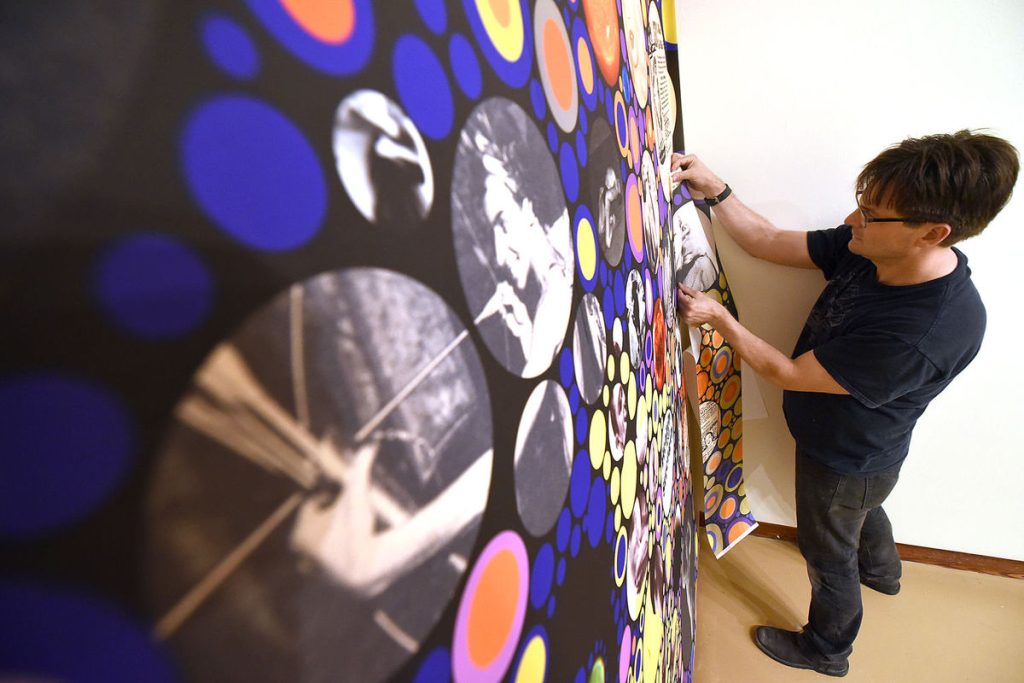
Latex printing has become a popular choice for interior graphics, wallcoverings, retail displays and vehicle work. The water-based inks are cured by heat in the printer, so prints leave the machine dry and ready to finish. They are flexible, have little odour and generally resist scratching better than many people expect.
So the question with latex is less “will it survive?” and more “will it survive this particular location?” A hotel corridor wallcovering, a restaurant menu board, a touchscreen surround in a shop or a graphic near a kitchen will face cleaning products, knocks and repeated contact that test any ink.
Where protection earns its keep
- High-traffic interiors. Corridors, stairwells, schools and healthcare settings, where walls get brushed and cleaned often.
- Chemical exposure. Areas cleaned with stronger products, where Colourjet’s resistance to water and chemicals helps.
- Bright light. Window graphics and sunlit spaces, where the integrated UV inhibitors help guard against premature fading.
- Finish control. When a client wants a particular level of sheen across a whole installation.
Getting the timing right
Although latex prints feel dry straight away, it is still good practice to let them settle before coating, especially with high ink loads or if curing conditions were marginal. A print that was under-cured can feel slightly greasy or show smudging, and coating will not fix that. Check your printer’s curing settings for each media profile, and allow prints to dry and outgas fully before applying a coating.
Coating or Phototex?
For latex wall graphics that need to come down again, consider printing on Phototex. It is a printable self-adhesive woven fabric that works with latex printers, removes in one piece without damaging the wall and can be repositioned and reused. It avoids the edge curl and peeling that can trouble other removable media. Details are on our Phototex page.
For permanent installations and rigid or roll-to-roll prints that need a tougher surface, Colourjet or liquid lamination is the usual route. See the coating range.
Before you commit
- Test the coating on the actual media, since some uncoated or speciality substrates can react to solvent.
- Check flexibility if the print will be wrapped or rolled after coating.
- Compare colour and sheen against an uncoated print under the lighting it will be seen in.
Send us a latex sample on the media you plan to use and we will give you our view, or call the team on 01252 624 411.