
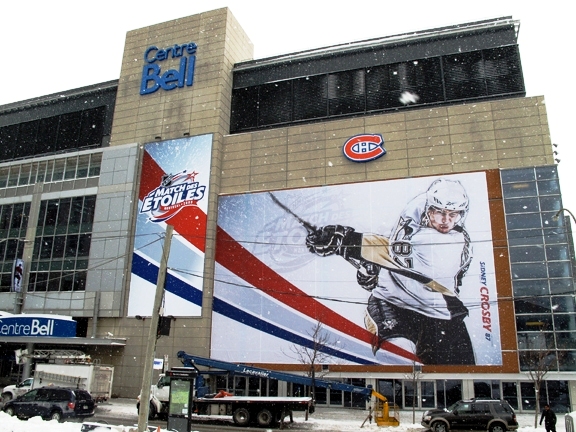
Full (or “hard”) solvent printers are still common in shops producing building wraps, hoardings, vehicle graphics and long-term outdoor signage. The inks use aggressive solvents that etch into vinyl and banner substrates, which is a large part of why the prints are so durable. It also means that putting a solvent coating such as Colourjet on top is a decision to test rather than assume.
Why coat a print that is already tough?
Solvent output resists weather well, but it is not immune to everything. Customers usually ask for extra protection when a graphic will be:
- cleaned regularly with detergents or pressure washers;
- exposed to graffiti, road grime or abrasion at street level;
- sited in strong sun for a long period, where extra UV inhibitors help slow fading;
- expected to have a consistent gloss or satin finish across panels.
The main risks
Two things cause most problems. The first is retained solvent. Hard solvent inks carry a lot of solvent, and prints keep releasing it long after they feel dry. Sealing that in with a coating can lead to softening, haze, poor adhesion or curling. Our guide to drying before coating explains why patience pays here, and why prints should dry loose rather than tightly rolled.
The second is chemical interaction. A solvent coating can re-wet or soften some solvent ink films, particularly in heavy, multi-layer areas. Whether that happens depends on the ink set, the ink load and the media, so it varies from shop to shop. We cannot predict it reliably from the printer name alone.
A sensible test routine
- Print a strip with your densest colours, solid black and any overprinted areas, on the exact media for the job.
- Let it dry fully under your normal conditions before coating.
- Apply a thin, even coat and watch for lifting, bleeding or a change in colour while it is wet.
- Once dry, check adhesion with a tape test, and look at the back of the media for any curl or distortion.
- If the graphic will go onto curves or rivets, apply a coated test piece the same way.
Our sample testing guide sets out a fuller routine you can repeat whenever you change ink or media batches.
Application method
For wraps and large signage, hand rolling across big areas is hard to keep even, and uneven coats are where defects tend to start. A liquid lamination machine gives a more controlled film thickness. If you are comparing liquid coating with overlaminate film for outdoor work, see liquid vs film lamination; film is sometimes the better answer for vehicle work that needs conformability and a defined removal path.
If your test strip behaves oddly, or you would like a second opinion before a large outdoor job, send us a printed sample with details of the ink and media, or call 01252 624 411. You can also reach us through the contact page.