
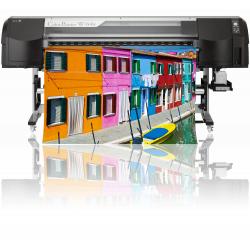
A large format printer is a significant investment, and the right choice depends far more on your work than on any specification sheet. Landor has spent more than 20 years supplying and installing large format printing systems and RIPs, and the most successful purchases we see start with a clear picture of what the printer needs to produce. Here are the questions worth answering first.
1. What will you print?
List the jobs you do now and the work you want to win. Fine art and photography, banners, vehicle graphics, wallpapers, posters and signage each place different demands on a printer. Be realistic about the mix: a machine bought for occasional specialist work can be expensive to run if most of your output is everyday display graphics.
2. Which ink technology?
- Aqueous pigment: widely used for fine art and photographic reproduction on papers and canvas.
- Eco-solvent: a long-standing choice for signage, vehicle graphics and banners on vinyl and other coated and uncoated media.
- Latex: water-based inks cured by heat in the printer, used for a broad range of indoor and outdoor applications.
- UV: cured instantly by UV lamps, and often used for rigid materials as well as roll media.
Each has strengths and trade-offs in media range, finish, drying, environment and running costs. Ask to see your own artwork printed on your own media.
3. How wide?
Think about the widest media you use regularly, not the widest you might ever need. A wider machine needs more space and may cost more, but it can reduce tiling and seams on big jobs. Consider access too: can the printer get into the building, and can you load heavy rolls safely?
4. RIP software and colour
The RIP controls colour, nesting, tiling and job management, and it has a large effect on output quality and productivity. Check which RIP is included or recommended, whether profiles exist for the media you use, and how easily your team can learn it.
5. Finishing
A print is rarely finished when it leaves the printer. Plan for drying space, protection and cutting. Prints from pigment fine art, latex, UV and eco-solvent printers can be protected with Landor Liquid Lamination, and film lamination, X/Y cutters and heat presses may also feature in your workflow depending on the work.
6. Space and environment
Check the floor space, power supply, temperature and ventilation needs set out by the manufacturer. Solvent-based systems in particular need appropriate ventilation.
7. Installation, training and support
Ask who will install the printer, how your team will be trained, and what support is available when something goes wrong. Reliable local support is often worth more than a small saving on the purchase price.
Browse our current range on the printers page and finishing options on the equipment page.
When you are ready to talk specifics, our team can help you match a printer to your work. Call 01252 624 411 or book a conversation.