
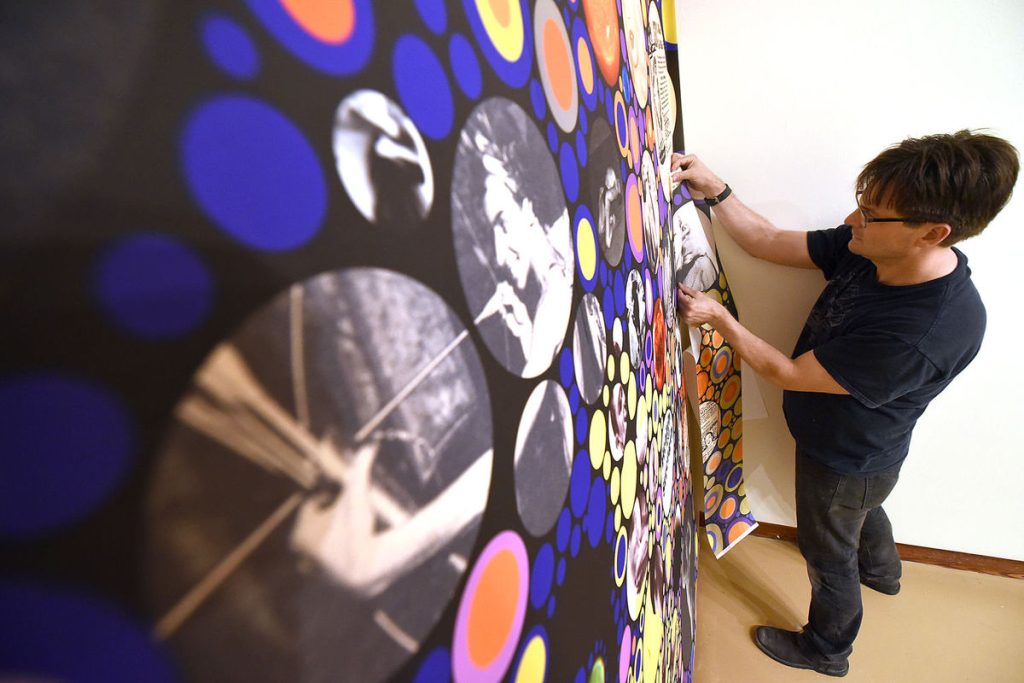
Printed scenery has largely replaced hand painting for many productions. A designer can turn a photograph into a period wallpaper, a shop front or an aged brick wall in the time it once took to prime a flat. But set graphics are handled constantly: loaded into trucks, struck and rebuilt on tour, brushed by actors and costumes, and lit hard every night. Protecting them is part of making them work.
Sheen is a creative decision
Under stage or studio lights, the finish of a printed surface matters as much as the image. A gloss surface can throw hotspots into a camera lens or the front rows; a duller surface reads more like paint or plaster. Discuss the finish with your lighting designer or director of photography and test it under the actual rig where possible. Our guide to choosing a finish covers the options.
For props and small set pieces, ClearJet aerosol coatings in gloss and semi-gloss are handy for workshop touch-ups, signage on props and short runs where a roller or machine would be overkill.
Protecting graphics that travel
Colourjet is a solvent coating that protects artwork from water, chemicals and abrasion, with integrated UV inhibitors against premature fading. Applied through Landor Liquid Lamination, it adds a durable protective layer over prints from pigment, latex, UV and eco-solvent printers. For touring productions, that layer helps graphics survive repeated packing and fit-ups, and lets crews wipe off scuffs and stage dust between venues.
- Printed cloths and backdrops
- Faux wallpapers, tiles and textured surfaces on flats
- In-world signage, posters and shop fronts
- Studio sets for TV series that are stored and reused between seasons
- Location dressing that must be removed without trace
Dressing real locations
When a crew transforms a real interior, the owner expects it back exactly as it was. Phototex is a printable self-adhesive woven fabric that removes in one piece without surface damage, and it can be repositioned while you get the alignment right. It does not curl at the edges or peel, so it stays tidy in close-up, and art department crew can put it up without specialist installers. Use it on interior walls only, and try a test piece on the location’s paintwork before committing.
Fire safety and venue rules
Theatres and studios have their own requirements for scenic materials, and those usually involve flame retardancy. We do not make fire-rating claims for our coatings or media. Check with the media manufacturer, the venue’s technical manager and your production’s safety adviser, and bear in mind that adding a coating changes the surface, so any treatment or certification needs to account for the finished item.
Solvent coatings do not suit every substrate or ink, and scenic budgets rarely allow for reprints. Run a test on a sample of the actual media first.
If you are a scenic printer or art department planning a build, call 01252 624 411 to discuss coatings and media, or get in touch through the contact page.