
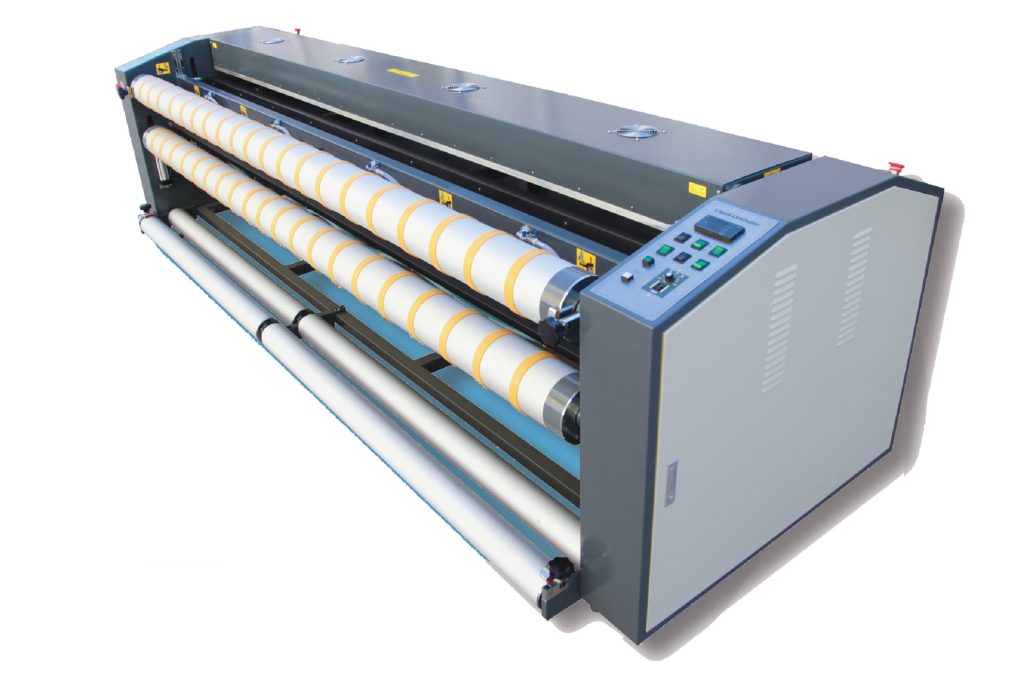
Most print businesses start coating by hand. A roller or aerosol costs little and copes with the occasional canvas or art print. As volumes grow, though, hand coating can start to limit what you can take on. A liquid lamination machine applies coating in a controlled, repeatable way across the width of the media, and for the right business it changes coating from a bottleneck into a routine part of production.
Signs you may be ready
- Coating is a regular job, not an occasional one. If someone is rolling prints most days, the labour adds up quickly.
- Consistency is hard to guarantee. Different operators produce different results, and reprints because of streaks or patchy coverage eat into margin.
- You are turning down large work. Wallpapers, murals and long banners are difficult to coat evenly by hand.
- Material use feels high. Hand application tends to waste coating through overloading and spills.
- Customers are asking for protection. Interior designers, retailers and photographers increasingly expect it.
What a machine changes
The main gains are evenness and throughput. Because the machine controls how the coating is laid down, you get a more predictable finish from one job to the next, regardless of who is operating it. That makes it easier to quote confidently and to offer coating as a standard option rather than a special request. It also frees skilled staff for other work.
Questions to ask before buying
- What is the widest media you print, and do you expect that to change?
- Which inks and media will you be coating? Bring samples so the coating can be tested on them.
- Where will the machine go? You need floor space, room for prints to dry, and good ventilation for solvent coatings.
- Who will operate it, and what training will they need?
- What installation, support and servicing is available?
Working out the business case
Rather than relying on general figures, look at your own numbers. Estimate the hours currently spent coating, the cost of reprints caused by coating faults, and the work you have declined or lost. Then think about the additional coated work you could sell if it were quick and reliable. For many shops, the second figure matters more than the first.
It is also worth considering where film lamination fits. If a lot of your work is flat, rigid display graphics, a flatbed film laminator such as the Kala Applikator may meet part of the need. Plenty of businesses run both.
Experience you can lean on
Landor has spent more than 20 years supplying and installing large format printing systems and RIPs, and we supply liquid lamination machines alongside our coatings. See the range on our equipment page, and look at the applications our customers coat.
If you are weighing up a machine, we are happy to talk through your volumes and space. Call 01252 624 411 or arrange a conversation.