
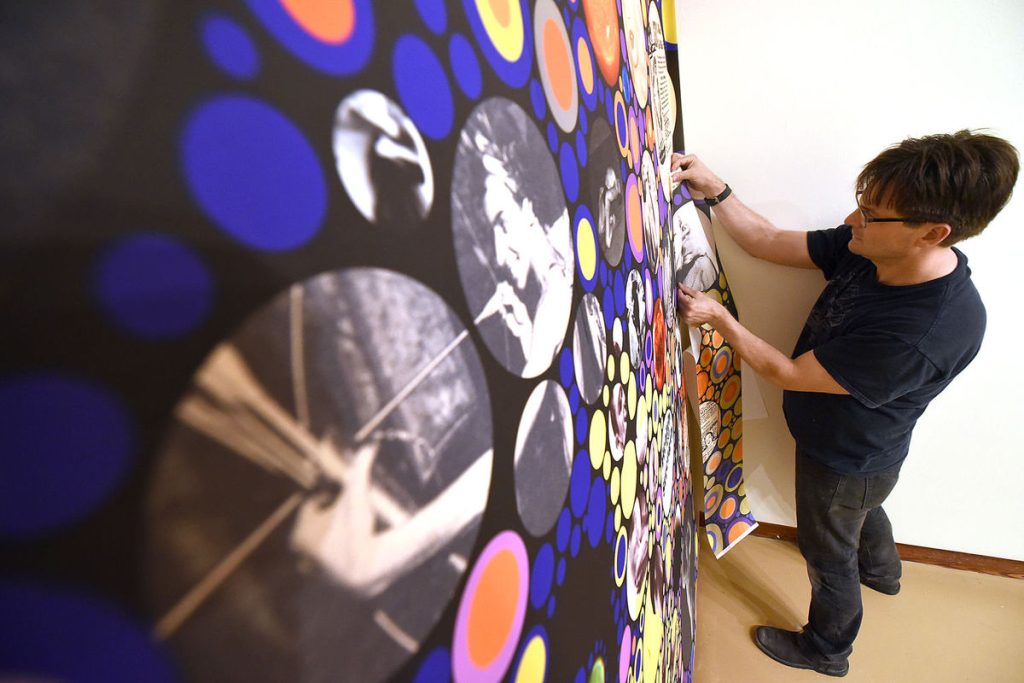
Self-adhesive vinyl is probably the most printed media in the sign trade. Window graphics, wall decals, shop fit-out, exhibition panels, vehicle livery and labels all start life as printed vinyl. The usual way to protect it is with an overlaminate film, but liquid coating is a practical alternative for many jobs, and sometimes a better one.
Film or liquid?
Film laminate gives a known, consistent layer and is often specified by vinyl manufacturers for particular applications. Liquid lamination with Colourjet has its own advantages:
- No risk of silvering, trapped air or tunnelling between laminate and print.
- No laminate edge to lift on contour-cut graphics.
- Good on textured, embossed and wall vinyls where film can struggle to conform.
- Protection against water, chemicals and abrasion, with integrated UV inhibitors.
Where a vinyl or wrap film manufacturer requires a specific overlaminate to support its warranty, follow that requirement.
What to consider by ink type
Most printed vinyl comes from eco-solvent, solvent, latex or UV printers. With solvent-based inks, let the print dry and outgas fully before coating; vinyl is not breathable, so trapped solvent has nowhere to go. Latex vinyl should be properly cured. UV-printed vinyl needs a check on adhesion once coated.
Things to test before production
- Adhesive and liner. Make sure the coating does not reach the liner or adhesive at edges, and that the coated print still releases cleanly from the liner.
- Conformability. Cast and calendered vinyls stretch differently. If the graphic will go over rivets, curves or corrugations, test the coated sample on a similar surface.
- Cutting and weeding. Coat before or after cutting and check which gives cleaner results on your plotter.
- Removable vinyls. Check that removability is not affected.
An alternative for walls
For wall graphics that need to come down cleanly and possibly go back up elsewhere, consider Phototex instead of vinyl. It is a printable self-adhesive woven fabric that removes in one piece without surface damage, can be repositioned and reused, and does not suffer from edge curl or peeling. It works with pigment, latex, UV and eco-solvent printers. See Phototex.
For production coating of vinyl rolls, see the liquid lamination machines on our equipment page.
Got a vinyl job where film is causing problems? Send us a printed sample and we will try a liquid coat, or give us a call on 01252 624 411.