
In many print shops, coating happens when someone remembers. A print comes off the printer, sits on a bench, gets coated when there is a gap, and goes out when it seems dry. That works until the shop gets busy. Treating coating as a defined production stage, with its own time, space and checks, makes delivery dates more reliable and results more consistent.
Start at the order
Decide on protection when the job is booked, not after it is printed. The job sheet should record whether the print is coated, which coating and finish, how many coats and any customer requirements. That lets the printer operator choose suitable media and ink settings, and it lets whoever schedules the work allow for drying time. If you are new to discussing protection with customers, our guide to selling print protection may help.
A typical coated-print route
- Job booked with the coating specification on the job sheet.
- Media and ink combination checked against previous sample tests. If it has not been tested, a test is scheduled first.
- Print produced and labelled with the job number and the time it came off the printer.
- Print moved to a drying area and held until it has dried and outgassed sufficiently for that media and ink.
- Print inspected, dusted and coated in the finishing area.
- Coated print dried and cured as directed on the coating’s data sheet, then inspected under good light.
- Print finished (stretched, mounted or trimmed), packed and dispatched with aftercare information.
Scheduling around drying
Drying is the stage that causes most bottlenecks. It cannot be rushed without risk, so build it into lead times from the start. Batching helps: coating several jobs in one session makes better use of set-up and clean-down time, and moving them to drying together frees the work surface. The time needed depends on the ink, media, coating and conditions, so use the data sheet and your own test results as the basis for your schedule rather than a fixed rule.
Keep records
A simple log for each coated job, noting date, operator, coating batch, method and number of coats, pays for itself the first time a customer reports a problem. It also helps you spot patterns, such as a particular media that keeps showing defects. Keep your sample test results in the same place so operators can look up whether a combination has been approved. Our sample testing guide suggests what to record.
When volume grows
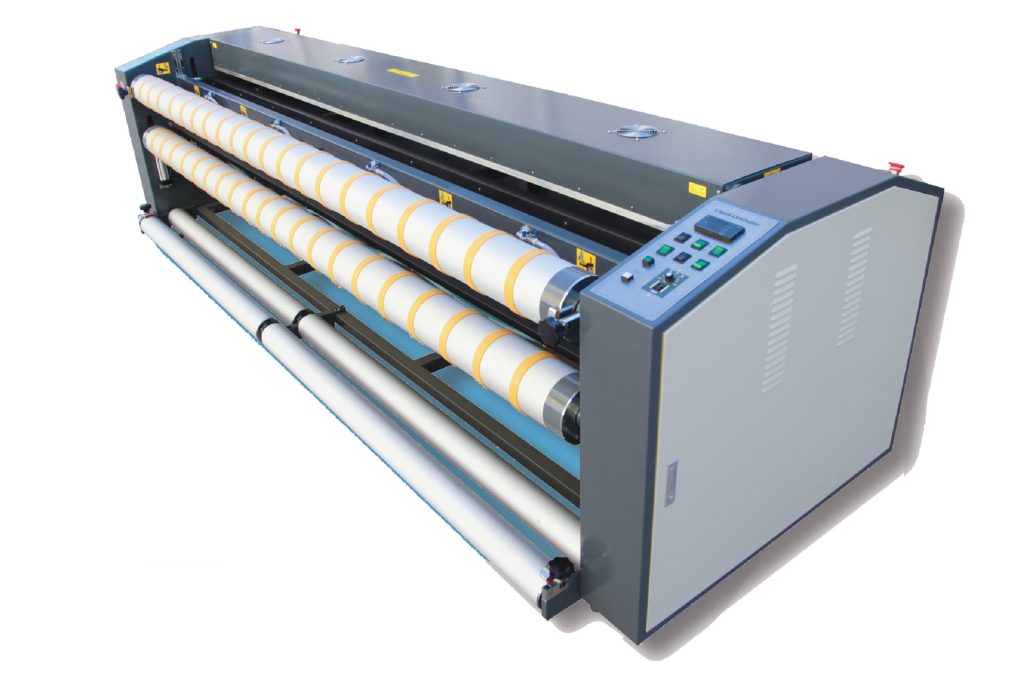
If coating is regularly holding up dispatch, look at where the time goes. Sometimes the answer is more drying space; sometimes it is moving from hand application to a liquid lamination machine, which applies coating consistently and can reduce rework. Landor supplies both coating machines and coatings, listed on our equipment page.
To talk through how coating could fit your production, phone 01252 624 411 or contact us online at our contact page.