
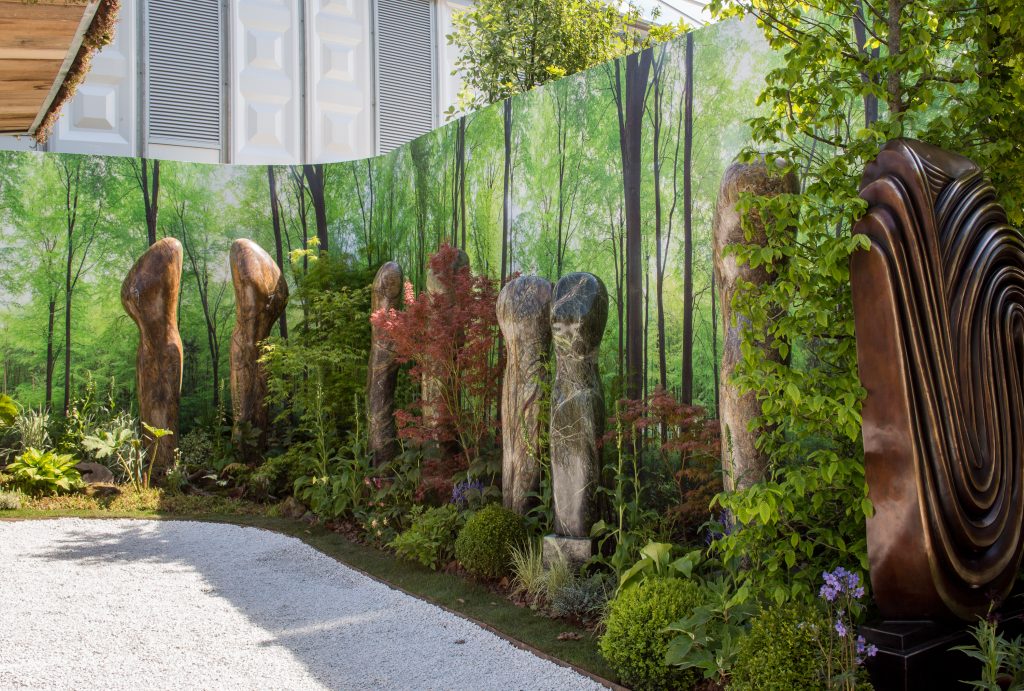
A large mural is judged as one image. Viewers rarely notice good installation, but they always notice a panel that is out of line, a seam that has lifted or a key detail cut off by a door frame. Most of the work happens before the first panel goes up.
Survey and setting out
Measure the wall at several heights and widths; few walls are perfectly square. Note sockets, switches, vents, radiators and anything that will be fixed to the wall later. Share these with the designer so faces, text and focal points do not land behind a light switch or across a corner. Ask for some bleed around the design so you have room to adjust on site.
Before installation day, confirm the media and how it fixes. A paste-applied wallcovering, a self-adhesive vinyl and a self-adhesive fabric such as Phototex each have their own method. Phototex is designed to be easy to install without specialist installers and can be repositioned while you work, which is useful on a large job. See our guide to installing Phototex for the media-specific detail.
On the day
- Check the wall is clean, dry and sound, and that any paint has fully dried as its manufacturer advises.
- Lay out all panels in order and check the numbering, image match and condition.
- Decide on a starting point. Starting from a central plumb line and working outwards often hides wall irregularities better than starting in a corner.
- Mark a true vertical with a laser or plumb line, and a horizontal reference if the design has a strong horizon or text.
- Hang the first panel to the guide lines and check it carefully before continuing; every other panel depends on it.
- Hang each following panel by matching the image at the joint, then smoothing from the centre outwards.
- Stand back regularly to check the whole image, not just the seam in front of you.
- Trim around edges, sockets and switches with a sharp blade, taking electrical safety precautions where you work around fittings.
- Do a final inspection in the room’s normal lighting and deal with any lifted edges or trapped air.
Working safely at height
Large murals usually mean ladders, steps or platforms. Use access equipment suited to the height and floor, and plan the job so you are not overreaching while holding a panel. Two people make handling long panels much easier and reduce the risk of creasing the print.
Protection for busy spaces
Murals in corridors, cafés, schools and other high-traffic areas take knocks, scuffs and cleaning. A liquid laminate applied before installation adds resistance to water, chemicals and abrasion, and its UV inhibitors help guard against premature fading near windows. Test the coating on the same media first and make sure it has fully cured before the panels are rolled for transport. Our wall murals page has more on suitable materials.
Planning a mural installation and want a second opinion on media or finishing? Call 01252 624 411 or send Landor a message.